
Order allowing presidential papers
secrecy should be reversed
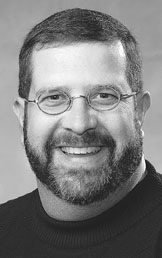
By Charles N. Davis
If your holiday shopping this season finds you in a bookstore, take a moment and do me a favor.
Ask for the section on presidential history, and go take a peek. I’ll hazard a guess you’ll find literally hundreds of works of presidential history, from the scholarly tomes with hundreds of footnotes to the downright sill works on presidential pets.
Now, take a moment and imagine it’s 2033, and you’re looking for a nice downloadable e-book history of the Clinton or Bush presidency.
What you find is truly disappointing: they look and feel like history, but sit down and read one for a moment, and the experience is wholly unsatisfying. Where is the background, the context provided by all of those once-classified memos detailing the West Wing intrigue that makes history truly come to life. Instead, we get the learned best guesses of the nation’s finest historians working without their tools: the primary documents that make history, well, history.
Sounds like a nightmare, eh? It’s reality, for the moment, and it will rob us of our nation’s historical record unless We The People wake up and do something about it.
A bit of history we do know: In November 2001, just as the National Archives was preparing to release a small portion of the records of the Reagan administration, President George W. Bush issued Executive Order 13233. The order gives former presidents and their assignees the right to prevent the release of presidential papers -- forever. It also allows a sitting president to block the release of a former president's records, even after that former president has signaled his approval. It requires that those who challenge the action of either a former president or the sitting president seek redress in court.
Historians, most of Congress and Americans who know that our history begets our future, howled in protest, and our elected representatives slowly but surely swung into action. The House passed The Presidential Records Act Amendments of 2007 (H.R. 1255/S. 886) by a veto-proof margin (333-93) with 104 Republicans breaking ranks with the Administration.
The bill would nullify the Bush executive order and re-establish procedures to ensure the timely release of presidential records that the Presidential Records Act was designed to ensure. The bill also has broad bipartisan support in the Senate, and cleared the Senate Homeland Security and Government Affairs Committee by voice vote earlier this year.
We were well on our way to reclaiming our history, when on September 24, 2007, Senator Jim Bunning (R-Ky.) objected to floor consideration of H.R. 1255/S. 886 under unanimous consent, holding up a vote on the bill. Despite repeated requests from a host of historical, news media and open government organizations, Senator Bunning has refused to state the reasons for his opposition to the bill. Recently, the White House reiterated its threat to veto the bill should it pass Congress.
For the second time this year, a lone senator
has acted in the least democratic way possible to commit an act
of legislative hostage taking. You may recall Sen. Kyl’s
secret hold on meaningful reforms to the federal Freedom of
Information Act. Sen. Kyl, to his credit, ultimately chose to
voice his objections and work to address them. No such luck with
Sen. Bunning, who prefers his lawmaking be done in silence. The
World’s Greatest Deliberative Body is neither great nor
terribly deliberative in this instance.
When the history this sad spectacle is written, it will note that
the Presidential Records Act gutted by the president and aided
and abetted by the callous silence of Sen. Bunning comes with a
rather remarkable history of its own.
It’s worth remembering that the Presidential Records Act of 1978 emerged from the tattered remnants of the Nixon presidency, in direct reaction to another presidential power grab. It’s a remarkably straightforward piece of legislation: Under the law, the U.S. government asserts complete "ownership, possession, and control" of all Presidential and Vice-Presidential records. Upon conclusion of the President's term in office, the National Archivist is required to assume custody of the records, and to make them available to the public when permissible under the PRA. Access to the records can be denied after the end of the 12-year embargo only if a former or incumbent president claims an exemption based on a "constitutionally based" executive privilege or continuing national security concern.
It’s simple, really: the Bush administration wants to write its own history. Future presidents, Republican or Democrat, will find that sort of control downright intoxicating. If this Executive Order is not overturned by Congress it will allow any president, their heirs, and – for the first time – the vice president and heirs, to deny the American people access to the full historical record of all future administrations.
And that is guaranteed to produce some tired pickings at your local bookstore in the near future.
Charles N. Davis, a member of SPJ’s
Freedom of Information Committee, serves as the executive
director of the National Freedom of Information Coalition at the
University of Missouri School of Journalism.
If you would rather not receive future email
messages from Society of Professional Journalists, let us know by
clicking here.
Society of Professional Journalists, 3909 N Meridian St,
Indianapolis, IN 46208-4011 United States
For Immediate Release:
12/11/2007
Contact:
Clint
Brewer, President, (615) 301-9229
Beth King, Communications Manager, (317) 927-8000, ext. 211
INDIANAPOLIS – In another step toward ensuring government
transparency, leaders of the Society of Professional Journalists
signed onto a letter Friday with 31 open
government groups, asking for Sens. Hillary Clinton, D-N.Y.,
Joseph Biden, D-Del., Christopher Dodd, D-Conn. and John McCain,
R-Ariz. to co-sponsor S. 886, "The Presidential Records Act
Amendments of 2007." Currently, the only presidential
candidate to co-sponsor S. 886 is Sen. Barack Obama, D-Ill.
Additional co-sponsors include Sens. John Cornyn, R-Texas and
Jeff Bingaman, D-N.M.
"Without this legislation, the American public will be kept
in the dark about their recent presidents, from Reagan to the
current Bush administration," said David Cuillier, chairman
of SPJ’s Freedom of Information Committee.
In November 2001, President George W. Bush issued Executive Order
13233, giving current and former presidents and vice presidents,
and their heirs, broad authority to withhold presidential records
or delay their release.
"The Presidential Records Act Amendments of 2007" (S.
886) would re-establish procedures to ensure the timely release
of presidential records that the Presidential Records Act of 1978
was designed to ensure.
"The history of the highest office in the land and the
leader of the free world should not be cloaked in secrecy,"
SPJ National President Clint Brewer said. "Nor should access
to what are rightfully public records and papers be cloistered
based on the decisions and whims of a few citizens, unelected to
any office. Presidential families deserve our nation’s
respect, but have not earned the right to sway public policy and
hamper government transparency."
The House version of this legislation (H.R. 1255) passed on March
14, 2007 by 333-93, including 104 Republicans. The Senate bill
has broad bipartisan support, and cleared the Senate Homeland
Security and Government Affairs Committee by voice vote earlier
this year.
To ensure additional support for S. 866, SPJ leaders are
encouraging members and public citizens to contact their state senators and asking them
to support measures to keep presidential records open.
The Society of Professional Journalists works to improve and
protect journalism. SPJ is dedicated to encouraging the free
practice of journalism and stimulating high standards of ethical
behavior. Founded in 1909 as Sigma Delta Chi, and based in
Indianapolis, SPJ promotes the free flow of information vital to
a well-informed public, works to inspire and educate the next
generation of journalists, and protects First Amendment
guarantees of freedom of speech and press. For more information
about SPJ and SDX, please visit www.spj.org.
Sunshine Chairs and FOI
Committee members,
We had talked last month about making our FOI project for the
year a focus
on the Sunshine Campaign, bringing it down to the state and local
level to
identify key access issues in each state and get political
candidates to go
on the record for how they stand on those issues. It would
dovetail with the
Sunshine Campaign that ASNE is launching at the federal level
(identifying
federal FOI issues and nailing down the positions of presidential
and
congressional candidates).
I exchanged e-mails with Charles Davis from the National Freedom
of
Information Coalition and he was interested in working together
on this sort
of thing. Between the coalitions and the SPJ Sunshine Network we
can
probably get a lot done.
Here's what I am proposing. Please let me know what you think.
1. Sunshine Chairs would each put together their own network in
their
respective states with maybe at least 10-20 people at the major
papers/stations, SPJ chapter leaders, media lawyers, and others
into access
issues. Each chair would create an e-mail list for sending out
information
and gathering it.
2. Then each chair would ask their network folks to chime in with
at
least five major access problems in their state, such as access
to e-mail,
insufficient penalties for noncompliance, etc.
3. Each chair would then boil down the responses to three-five
key
issues and pose them as questions that can be asked of candidates
(e.g.,
"E-mail is currently not considered public in our state but
it is in many
other states. Would you support legislation to make public
officials' e-mail
subject to the public records law?").
4. The chair would then send the questions out to the media and
their
network and ask people to ask their local or state candidates
their
responses, and then forward those responses back.
5. We would try to post those responses on a Web site for each
state so
journalists and citizens could see what the key issues are in
each state and
how candidates stand on those issues.
Any thoughts?
-- Dave
Today SPJ joined 25 other
organizations to oppose a provision in the
proposed farm bill that would make it illegal to disclose cow
directory
information, including the number, breed, address and phone
numbers of cows
(and their farmers) in the country. This would make it difficult
for the
public to know if there are sickly cows (mad-cow disease) in
their
communities. Feel free to get the word out in your states, and
email me news
from your state to share.
Information is posted on the FOI FYI blog,
http://www.spj.org/blog/blogs/foifyi/, along with other entries
from the
past week, including a proposal in South Dakota that would have
access
disputes resolved in a setting like small-claims court (Judge
Wapner and
Judge Judy to the rescue). Some items posted:
Utah
<http://www.spj.org/blog/blogs/foifyi/archive/2007/11/05/9456.aspx>
judge's order ignores right of free press
Arkansas
<http://www.spj.org/blog/blogs/foifyi/archive/2007/11/05/9455.aspx>
Supreme Court says contractor doesn't have to turn over records
South
<http://www.spj.org/blog/blogs/foifyi/archive/2007/11/05/9454.aspx>
Dakota attorney general proposes access disputes to be handled
like
small-claims court
Georgia
<http://www.spj.org/blog/blogs/foifyi/archive/2007/11/05/9453.aspx>
Supreme Court to hear arguments for opening files from
15-year-old murder
case
Schwarzenegger
<http://www.spj.org/blog/blogs/foifyi/archive/2007/11/04/9413.aspx>
is no
hero or villain when it comes to FOI
Reporters
<http://www.spj.org/blog/blogs/foifyi/archive/2007/11/01/9324.aspx>
Committee honors NPR, AP chief, Washington Post columnist, SPLC
leader
Some
<http://www.spj.org/blog/blogs/foifyi/archive/2007/10/31/9315.aspx>
improvement being made in Pennsylvania open records bill, but
it's still
lacking
Dallas
<http://www.spj.org/blog/blogs/foifyi/archive/2007/10/30/9295.aspx>
e-mails regarding city business ruled public even when sent on
personal
Blackberry
Georgia
<http://www.spj.org/blog/blogs/foifyi/archive/2007/10/29/9276.aspx>
legislator proposes making violation of Open Records Act a felony
Tennessee
<http://www.spj.org/blog/blogs/foifyi/archive/2007/10/26/9234.aspx>
proposal would make it easier for public bodies to meet secretly
Governments may restrict
access to birth records
by Meghan E. Murphy
Early next year the federal government will release proposed
regulations
that journalists expect will restrict access to state birth and
death
records.
The National Center for Health Statistics is drafting minimum
standards
for vital records in response to a mandate in the Intelligence
Reform
and Terrorism Prevention Act of 2004. The standards are intended
to
prevent identity theft, and states would be required to implement
the
federal regulations.
In 2005 the Federal Trade Commission received 255,565 complaints
of
identity theft nationwide. Terrorists steal identities to avoid
watch
lists, assimilate into society by obtaining jobs, bank accounts
and
identifying documents, and to raise money, said Sandra Hoffman,
Interim
director of the Identity Theft Partnerships in Prevention at
Michigan
State University. Along with other government documents, birth
certificates are used to steal identities, she said.
While journalism groups agree that identity theft prevention is
important, restricting access to vital records would impede the
work of
journalists, medical researchers, genealogists and archivists,
according
to The Sunshine in Government Initiative. "While we
recognize legitimate
concerns about protecting against identity theft or fraud, we
believe it
is important that these concerns be weighed against the
importance of
the public's right to access information held by the
government," the
group wrote in a letter to the National Center for Health
Statistics.
When Indiana officials accidentally swapped the identities of two
Taylor
University students involved in a car accident, death records and
the
coroner's report were essential to reporters trying to determine
how the
mistake occurred. Reporters also use birth and death records for
fact
checking purposes. For medical researchers, the documents are
imperative
for tracking trends in human health, including infant mortality
rates
and disease clusters.
The Sunshine in Government Initiative said that states can
protect
citizens' identities and open records by offering informational
copies
of birth and death records. After reviewing motor vehicle
licensing
procedures in every state, the initiative found that certified
copies of
birth certificates are required nationwide. The same is true for
obtaining a social security number.
But informational copies can be used to obtain certified birth
certificates, said Garland Land of the National Association for
Public
Health Statistics and Information System. Once a terrorist
obtains a
birth certificate, that document can be used to obtain a
passport,
credit card or driver's license. But Land did say the NCHS is
hoping to
achieve a balance between security and access for appropriate use
of
vital records.
The initiative said that by 2008 states are required to implement
strict
procedures to authenticate identity documents. Those procedures
should
make it impossible for anyone to use an informational birth
certificate
to obtain genuine documents.
In fact a very small percentage of complaints about identity
theft
assert that identifying documents were faked. In 2005, 2.7
percent of
identity thefts complaints included forged or illegally issued
driver's
licenses, social security cards or other government documents.
The
majority of complaints were for credit card, bank and telephone
or
utility charges.
"The U.S. government makes a lot of noise about preventing
identity
theft, but restricting or removing access to these basic public
records
is not the answer. It's just a smokescreen, said David Carlson,
president of the Society of Professional Journalists.
"If Washington truly wants to solve this problem, enacting
some real
regulations about how businesses -- and government employees --
can use,
trade, sell and even carry around Americans' personal information
on
laptops would have much greater success. So would enacting truly
severe
criminal penalties for anyone caught using another's identity or
credit
card or enforcing existing laws that make it illegal to use
Social
Security numbers for identification.
"Birth and death records are among the most basic of public
records.
They are used by children trying to track their birth parents, by
families researching their genealogy, by scientists tracking
health
trends, by journalists, and in a hundred more legitimate ways.
Restricting access to them to solve identity theft is like
closing up an
entire library because a book was stolen."
The draft regulations are expected to be issued by January 2007.
A
60-day public comment period will follow. Once regulations are
officially adopted, states will have two years to adopt the new
policies.
What can Sunshine Chairs do?
In a time of uncertainty regarding records releases, it's
important for
reporters to have current and accurate information about state
Sunshine
Laws. SPJ Chapter and Sunshine chairs can research local death
and birth
records release policies and distribute them to SPJ members.
After researching state statute, The Indiana Coalition for Open
Government found that its state keeps three types death records,
two of
which are available by records request. Their Sunshine Report
emphasized
the importance of citing the correct statute to obtain a death
record,
as the records all have similar names. The group created an
exemplary
web page with all of the information, which can be viewed at
http://www.indianacog.org/sunshinestory_taylor.html.
Chairpersons can also organize local SPJ members to write letters
regarding the importance of keeping birth and death records
public. Once
the proposed policy changes are released, the NCHS will accept
public
comment. The FOI committee will provide a list of talking points
at that
time, that chairs can distribute to members to encourage comment.
To provide comment before the proposed regulations are released,
mail
letters to Delton Atkinson, Division of Vital Statistics,
National
Center for Health Statistics, 3311 Toledo Rd. Room 7315,
Hyattsville, MD
20782.
Meghan E. Murphy is the editor of the Clear Creek Courant in
Idaho
Springs, Colo. and a member of the Colorado Pro Chapter of SPJ.
Subject: FOI Alert: Private
Campus Police Records Opened by Georgia Legislature
Date: Thursday, April 06, 2006 7:45 AM
FOI ALERT
Contact: Charles Davis, FOI Chair, 573/882-5736,
daviscn@missouri.edu
<mailto:daviscn@missouri.edu>
Private Campus Police Records Opened By Georgia Legislature
ATLANTA - On the last day of its 2006 session, the Georgia
General
Assembly approved a law that will give the public access to the
investigative records of private college police departments.
The language amending the state Campus Policemen Act, which
applies only
to private college campuses, was spliced onto another bill that
passed
Thursday, March 30, during the waning hours of the legislative
session
in a parliamentary move sponsored by Sen. David Adelman,
D-Atlanta.
It states: "Law enforcement records created, received, or
maintained by
campus policemen that relate to the investigation of criminal
conduct
and crimes as defined under Georgia law and which are not subject
to
protection from disclosure by any other Georgia law shall be made
available within a reasonable time after request for public
inspection
and copying."
Police records at public college campuses are already public
under the
state Open Records Act, but the Georgia Court of Appeals ruled in
2005
that it did not apply to private colleges. The court ruled that
the Open
Records Act was worded so that it could not be applied to records
developed and maintained by a private school's police department,
even
though the department's officers were state certified.
Adelman had introduced legislation in the 2005 session of the
Georgia
Legislature to correct the Open Records Act by bringing the
private
campus police departments under the law. That bill passed the
Georgia
Senate and the House Judiciary Committee but died in the House
Rules
Committee in the final days of the 2006 session.
Adelman was able to amend the Campus Policemen Act by tacking the
language onto HB1302,
a bill related to law enforcement involving street gang activity
at
public schools. He said he did not think it mattered that the new
language is not part of the Open Records Act.
"It's a distinction without a difference," Adelman
said. "This law
protects the right to know of the many thousands of Georgians who
live,
work, play and study on private college campuses."
"With this law in place, police at private colleges will
have to release
to the public their initial crime incident reports and arrest
records
just like all other Georgia police departments already do,"
said Carolyn
S. Carlson, a Georgia State University professor who lobbied for
the
language on behalf of the Society of Professional Journalists.
"Other records gathered and prepared during an ongoing
investigation are
exempt from disclosure under Georgia law but they all become
available
to the public when the investigation is completed," she
said.
Similar legislation is pending in the Massachusetts Senate.
Virginia is
the only state that currently has a law requiring private college
police
departments to make their records public.
The Society of Professional Journalists works to improve and
protect
journalism. SPJ is dedicated to encouraging the free practice of
journalism and stimulating high standards of ethical behavior.
Carlson
is a past national president of the organization.
Founded in 1909 as Sigma Delta Chi, and based in Indianapolis,
SPJ
promotes the free flow of information vital to a well-informed
public,
works to inspire and educate the next generation of journalists,
and
protects First Amendment guarantees of freedom of speech and
press.
Minnesota Governor Seeks to Limit Access to Public Records
FOI ALERT
03/27/2006
Contact:
Charles N. Davis, Freedom of Information Committee, (573)
882-5736 or
daviscn@missouri.edu
THE ISSUE: Earlier this month, Minnesota Governor Pawlenty
announced a
series of proposals that would limit access to government
records. The
plan, said to protect Minnesotans from identity theft, includes
efforts
to Reform Minnesota's Data Protection Act. In reference to the
Act,
Governor Pawlenty said, "Minnesota law provides that all
information
held by the government is public unless a specific law designates
it as
private. That's backwards."
However, a brief look at American political theory and some
Minnesota
Supreme Court decisions show that it is Governor Pawlenty that
may have
it backward.
The public's right to access government records, activities and
proceedings is grounded in American political theory. Because the
U.S.
government is based on the will of the people, or put simply,
because
the governed are in effect the governors, citizens need to know
what
government is doing. To govern efficiently, the electorate must
be
informed. And to be informed, they must have access to government
information.
To this end, Congress adopted the Freedom of Information Act in
1966 in
order to increase public access to federal documents. The Act was
extended to include access to digital information in 1996 with
the
adoption of the Electronic Freedom of Information Act Amendments.
The
FOIA recognizes the public nature of government records and
therefore
opens federal records to any person "for any public or
private use."
Since its adoption, the FOIA has allowed journalists to uncover a
wide
range of information important to the public.
All fifty states have adopted similar statutes that grant access
to
public records held by state, county and municipal governments.
Most of
these state laws begin with statements about the presumed
openness of
public records. For example, West Virginia's open laws statute
declares, "The people, in delegating authority, do not give
their public
servants the right to decide what is good for the people to know
and
what is not good for them not to know." Missouri's Sunshine
law states
that "public records shall be presumed open unless otherwise
exempt."
Likewise, Minnesota's freedom of information law
"establishes a
presumption that government data are public and are accessible by
the
public" unless exempted by federal or state law.
Former Chief Justice of the Minnesota Supreme Court Kathleen A.
Blatz,
who resigned her post in September 2005, agrees that public
access is
important to democracy. Chief Justice Blatz made the following
remarks
at the symposium "Public Access to Juvenile Court
Proceedings": "The
presumption of openness is one of the hallmarks of democracy, and
the
mere fact of openness matters far more than the actual number of
people
who avail themselves of the opportunities it affords.... People
act more
accountable if they know they may be held more accountable."
This is consistent with the Minnesota Supreme Court's ruling in
Minneapolis Star & Tribune Co. v. Schumacher, 392 N.W.2d 197,
202 (Minn.
1986). In that case, the Court said the right to access is
"considered
fundamental to a democratic state and is based on the principle
that
what transpires in the courtroom is public property." The
Court also
said that a party seeking to restrict this access by asserting a
countervailing interest has the burden of overcoming both the
public
interest in release of the documents and the strong presumption
in favor
of access.
The Minnesota Supreme Court has also contributed to a better
understanding of the purpose behind Minnesota's Open Meeting Law,
first
enacted in 1957. In 1983, the Minnesota Supreme Court articulated
three
purposes for the law by citing its previous decisions:
(1) "to prohibit actions being taken at a secret meeting
where it is
impossible for the interested public to become fully informed
concerning
board decisions or to detect improper influences." Lindahl
v.
Independent School District No. 306, 270 Minn. 164, 167, 133
N.W.2d 23,
26 (1965);
(2) "to assure the public's right to be informed,"
Channel 10, Inc. v.
Independent School District No. 709, 298 Minn. 306, 313, 215
N.W.2d 814,
821 (1974); and
(3) "to afford the public an opportunity to present its
views to the
board," Sullivan v. Credit River Township, 299 Minn. 170,
175, 217
N.W.2d 502, 506 (1974).
The Court also made clear in St. Cloud Newspaper, Inc. v.
District 742
Community Schools, 332 N.W.2d 1, 4 (Minn. 1983) that there is a
presumption of openness found to exist in the Open Meeting Law.
In that
case, the Court recognized this presumption of openness as the
default
principle-that when in doubt the meeting is to be assumed open.
In another decision in favor of public access, Star Tribune Co.,
et al.
v. Univ. of Minnesota Bd. of Regents, A03-124 (Minn. Sup. Ct.,
July 15,
2004), the Court ruled that when the University of Minnesota
Board of
Regents search for a new president, the process is subject to the
state's Open Meeting Laws and Data Practices Act.
"Application of the
Data Practices Act and the Open Meeting Law to the presidential
search
process does not dictate who must be selected, criteria for
consideration or the nature of the vote needed for
selection," the Court
found. "The only impact is the degree of public access to
the process."
What you can do: Monitor the situation in Minnesota carefully, as
trends
such as these tend to sweep across the states. To assist our
members in
Minnesota, contact the governor - and tell him that the
presumption of
openness is the cornerstone of democratic accountability.
----- SPJ FOI ALERT SUBSCRIPTION NOTE -----
To subscribe to the Society of Professional Journalists FOI
Alert,
contact SPJ at spj@spj.org or call 317/927-8000. In your message,
provide your name, organization, mailing address, e-mail address,
phone
number and fax number. There is no fee. We strongly encourage the
wide
dissemination and publication of these alerts in other forums.
Society of Professional Journalists
Eugene S. Pulliam National Journalism Center
3909 N. Meridian St.
Indianapolis, IN 46208-4045
317/927-8000
Public Access to Vital
Records Threatened by Terrorism Prevention Act
FOI ALERT
03/10/2006
Contact:
Charles N. Davis, SPJ Freedom of Information Committee, (573)
882-5736
or daviscn@missouri.edu
Pending federal regulations have state vital records officials
considering rollbacks in access to birth and death records. If
your
state officials aren't thinking about this issue yet, they soon
will be.
THE ISSUE: The implementation of a provision in the Intelligence
Reform
and Terrorism Act of 2004 that concerns public access to birth
and death
certificates. The provision, Public Law 108-458, requires minimum
standards for the use of birth certificates by Federal agencies
for
official purposes.
In response to the 9/11 Commission's recommendation that
"the federal
government should set standards for the issuance of birth
certificates,
and sources of identification such as drivers licenses,"
Congress passed
the Intelligence Reform and Terrorism Protection Act. Prior to
the
passage of the Act, there were no national standards for the
issuance of
these vital records; rather issuance was determined on a
state-by-state
basis.
Section 7211 of the Act-the minimum standards for birth
certificates
section-requires that "Not later than one year after the
date of the
enactment of this act, the Secretary of Health and Human Services
shall
by regulation establish minimum standards for birth certificates
for use
by Federal Agencies."
Among other things, the Act requires that the Secretary of Health
and
Human Services "establish requirements for proof and
verification of
identity as a condition of issuance of a birth certificate, with
additional security measures for the issuance of a birth
certificate for
a person who is not the applicant." However, it is up to the
state to
determine how non-official copies of birth certificates are
issued.
Concern has been expressed that the provision will make it harder
for
reporters, activists and genealogical researchers to access vital
records. Another problem seems to be the confusion among some
federal,
state, and local officials about what Public Law 108-458 actually
prescribes.
One of the problems is that we don't know what it prescribes and
won't
know any sooner than June 2006. On December 21, 2005, Secretary
Leavitt
of the Department of Health and Human Services re-delegated
authority to
the Director of the Center for Disease Control and Prevention
(CDC). As
a result, issuance of the regulations has been postponed.
However, it appears as if some states are taking steps in
anticipation
of the regulations.
South Dakota has sealed off public access to certified birth and
death
certificates, marriage licenses and divorce records. To obtain a
copy
of these records, the applicant must have a "direct and
tangible
interest" or a "significant legal relationship"
with the person whose
record is being sought. However, informational copies of any
vital
record are available to requesters who complete an application
and
provide identification.
(http://www.state.sd.us/doh/VitalRec/vital.htm)
Some states like Rhode Island and Colorado have guidelines
similar to
South Dakota. Colorado will issue copies of birth records to the
"person named on the record, members of the immediate
family, legal
representatives of those named above, and others demonstrating a
direct
and tangible interest in the record." Certified copies of
death records
may be issued to "parents; grandparents; stepparents;
siblings; spouse;
adult children, stepchildren or grandchildren of the deceased;
legal
representatives of any of the above; legal representatives of the
deceased; probate researchers; genealogists representing family
members
with appropriate credentials; others who may demonstrate a direct
and
tangible interest when information is needed for determination or
protection of a personal property right."
(http://www.cdphe.state.co.us/hs/vrfaqs.html )
Other states such as Oklahoma, Missouri, New Hampshire, Texas,
Iowa,
South Carolina and West Virginia have similar limits to access.
West
Virginia states boldly that it "is not an 'open record'
state."
(http://www.wvdhhr.org/bph/oehp/hsc/birtcert.htm )
Some states such as California have passed laws in response to
the
Terrorism Prevention Act. One such law reads that to "help
protect
against identity theft, the law requires that only an authorized
person
(as defined by law) may receive a Certified Copy of a birth or
death
record." ( www.dhs.ca.gov/hisp/chs/OVR/amendments/
< http://www.dhs.ca.gov/hisp/chs/OVR/amendments/ > )
Other states like New Jersey allow public access to informational
copies
of vital records, but to obtain a certified copy requires proof
from the
subject of the record. Since 1994, New Jersey has limited access
to
cause of death information on a death certificates to
"surviving
spouses, caretaking partners, parents, executors or other
authorized
representatives [who] may see the entire death certificate."
(www.gti.net/mocolib1/vital.html
< http://www.gti.net/mocolib1/vital.html > )
Among other states who also limit cause of death information are
Florida
and Tennessee.
What you can do:
Get in touch with your state's FOI coalition and your state's
vital
records officials and begin discussing ways to avoid an
all-or-nothing
approach. Sponsor a roundtable discussion, and do stories on the
issue.